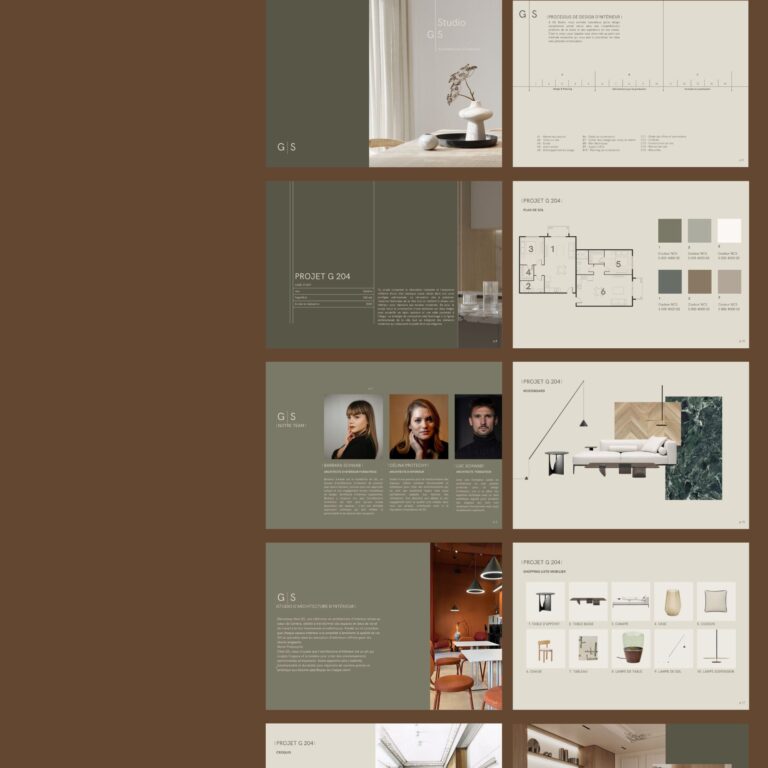

Discover the strategy and how to structure your listening and transform your client's vague needs into a clear and controlled interior design project.
You're not designing for yourself: why framing your creativity is the key to your profession as an architect, we're sharing our strategy with you.
Being an interior designer isn't just about having good taste. It's about capturing the invisible. Reading between the lines. Translating a vague desire into an inhabited space.
You don't imagine your own daily life. You think for someone else.
You feel, you guess, you interpret.
And despite this vagueness, or because of it, you have to decide. To create. Take responsibility for every detail.
That's where your profession comes into its own: between intuition and method.

1. Listening is not enough. You need structure.
A customer will never say:
“I'd like a 14 m² north-east kitchen with a terrazzo worktop and a wall-mounted light 1.80 m above the floor.”
No. What you're hearing is more like:
“I'd like my food to be friendly... a bit Mediterranean... but not cliché.”
You translate.
And to translate well, you need a solid framework. Not to curb your creativity, but to guide and channel it.
2. Strategy for understanding your client as an interior designer: laying the right foundations
Before you draw anything, there's one step you can't skip: understanding your client.
Not just listening to what they say, but capturing their feelings and expectations, even when they themselves are unable to formulate them clearly.
This is where your strategy.
Understanding your customer isn't magic. It's a method. A combination of listening, intuition and practical tools. And if you want your projects to run smoothly, your customers to be satisfied, and you to have time to create better, this strategy has to become your foundation.
1. Active listening: the first building block in your architectural strategy
Before proposing, drawing or structuring... you must listen to.
But not listening on the surface. Listen really.
Carefully, sensitively and methodically.
Because often your customer doesn't know how to express what they want.
It speaks in emotions, feelings and contradictions.
It's up to you to decode, reformulate and clarify.
And to do that, you need to activate an essential skill in your profession: active listening.
A. Be fully present to your customer
You can't listen properly if you're already thinking about your answer, your portfolio or your schedule.
Active listening means :
- Looking at your customer, with no screen between you
- Leaving silences
- Show that you understand, without immediately interpreting
- Create a climate where talking can happen naturally
Your customer needs to feel that you're there for them, not just for your project.
B. Identifying what is said... and what is not said
Sometimes what your customer doesn't say is just as important as what they do say.
Go to attentive à :
- What he repeats several times (even without realising it)
- What he avoids saying
- The gestures, the hesitations, the fleeting glances
- The «I don't really know»... which often means «I don't dare say».»
You don't listen to tick a box, you listen to understand the human element behind the request.
C. Asking questions that get people talking
A good listening strategy is based on the right questions.
The ones that open up, that trigger a real exchange. For example:
- «How would you like to feel when you get home?»
- «What's not working at all today in your space?»
- «Is there a place where you felt particularly comfortable?»
- «What do you absolutely want to avoid?»
You are looking for intentions, not objects.
What your customer wants to experience, not just what they want to see.
D. Note, summarise, cross-reference
Active listening is useless if you don't don't write down what you hear.
Take notes:
- During the appointment (or just after if you prefer to keep eye contact)
- By differentiating between facts, feelings and dreams
- Highlighting points for further study
Then summarise. Bring ideas together. Cross-reference the information.
You don't create from raw words. You create from signals you've connected.

3. The customer brief: a tool, not a formality
The client brief is not a document to be filled in for the sake of it.
It is the backbone of your project, the foundation that will guide all your decisions.
And yet, it is often sloppy, improvised or... ignored.
Your mission as an architect: to make it a strategic tool, which helps you to focus, save time and create with confidence.
1. Prepare a real customer questionnaire
A good brief starts with before the appointment.
Prepare a clear, accessible but well thought-out questionnaire. It should :
- Ask open-ended questions («What's bothering you in your space today?»)
- Exploring the aesthetic, the functional and the emotional
- Allow you to’identify real priorities, even if they are not formulated
You can send in this questionnaire before the 1st appointment, or use it as a guide during the exchange.
A customer who writes is a customer who has already clarified his thoughts. And you're one step ahead.
2. Rephrase to confirm what you have understood
Customers don't always know what they're saying. They may be vague, contradictory or influenced by trends.
Your role as an architect is to rephrase what you hear, and then ask them if they like it:
“To sum up: you want a bright, fairly uncluttered room, but with materials that warm you up. And above all you want it to be easy to live with every day. Is that it?”
This validation enables :
- Avoid misunderstandings from the outset
- To show you're listening
- Establish a climate of professional trust
3. Organise the brief into three key areas
To ensure that your brief really serves you throughout the project, structure it around these three points:
1. Functional
- What are the customer's habits?
- What uses are planned?
- What are the technical constraints?
2. Aesthetics
- What kind of atmosphere are you looking for?
- What colours, materials and styles do you hate?
- What are your references or inspirations?
3. Emotional
- What effect should the space have?
- What does the customer want to feel?
- What memories, symbols and experiences influence their tastes?
This threefold reading ensures that you don't forget anything... and that your project is rooted in reality.
4. Don't try to solve everything on the first date
A common trap: trying to get out of a first date with the perfect solution.
Resist.
Your role is not to give instant answers. It's about ask the right questions, collect and structure.
Take your time:
- Allow the brief to mature
- Making links
- Build a coherent intention
Your authority comes not from your speed, but from your clarity.

4. Translating vagueness: your key skill
This is often where a lot of people get stuck: you get vague words, vague desires, “I'd like it to be warm... but not too rustic”.
Your customer rarely arrives with a clear head.
He has no architectural vocabulary, no precise vision - and he doesn't always know what he wants.
And that's normal. It's your role of helping him to clarify.
Your strength is to capture the essence of what it poorly expresses, to reformulate it visually and spatially, and to create from this fog.
1. Accept that vagueness is part of the process
Many young interior designers panic when the brief is too vague.
But this vagueness is not a problem. It is a starting point.
You're here to :
- Identify intentions from disconnected examples
- Identify recurring patterns in what the customer says
- Creating a common thread that he himself does not yet see
Vagueness is a raw material. Not a failure of communication.
2. Guiding the customer's projection
Your customer doesn't visualise space the way you do.
It needs visual cues to plan ahead.
Here's what you can use:
- Themed moodboards (by mood, material, colour)
- Annotated references (asking them what they like and don't like, and why)
- Concrete examples, but within a framework (to avoid an incoherent patchwork)
The idea isn't to make her choose your style - it's to find a common language.
3. Create a consistent reading filter
Once you have identified what your customer is feeling, what they like, what they shun... you can formulate a clear intention :
“We're going for a soft, light interior with rounded lines and natural materials. You want to feel soothed as soon as you get home.”
This common thread becomes your creative filter. You can use it to :
- Guiding technical choices
- Justify your bias
- Maintaining overall consistency right down to the last detail
The earlier you set this intention, the faster and better you'll create.
4. Beware of the pitfall: don't invent everything for the customer
You translate, you don't impose.
Even if you have a strong vision, your role is not to project your tastes or lifestyle onto your customer.
- Reformulates, but requires validation
- Propose, but listen carefully
- Guidance, but with humility
What you deliver is a made-to-measure project. Not a showcase for your style.
5. Practical tools to help you make the right decisions
Your intuition is invaluable.
But if you really want it to serve your project (and your client), you need to frame it with structuring tools.
Not to slow it down - to make it more precise.
Here are 4 tools to help you make clear, coherent and, above all, responsible decisions.
1. The functional grid: laying the concrete foundations for the project
You can have the best ideas in the world, but if the project doesn't does not work on a daily basis, it won't last.
Create a grid or table with the essential functional requirements :
- Number of inhabitants
- Daily rituals (making coffee, teleworking, entertaining...)
- Specific constraints (storage, children, noise, neighbours, etc.)
- Materials to avoid
This grid helps you to avoid losing yourself in aesthetics too quickly. It reminds you who you're designing for.
2. The principle plan: structuring the space without over-detailing
It's time to define functions, But we haven't yet put the materials or objects down.
You draw :
- Traffic areas
- Main functions by room
- Volume and focus
The aim: to create a clear, readable structure, which you can then add to.
It's also an excellent tool for validating a direction with your client without immediately entering into micro-decision making.
3. The room-by-room file: thinking through each space in detail
Often overlooked, this sheet allows you to’anticipating needs and choices for each part, without mixing everything together.
You note:
- Main objectives of the play
- Constraints (surface, light, traffic)
- The right atmosphere and materials
- Technical elements to be provided (sockets, plumbing, lighting)
You move forward more serenely when you know exactly what you have to decide, piece by piece.
4. The aesthetic filter: staying consistent from A to Z
A good project is not an accumulation of Pinterest ideas.
It's an aesthetic intention consistent, from floor to ceiling, from concept to finish.
For this:
- Creates an aesthetic filter (e.g. “raw materials + soft shapes + indirect light”)
- Write it down in black and white
- Make it your referent throughout the project
- Ask the customer to validate this filter at the start of the creation phase.
This filter will help you avoid the hesitations and detours that drain your time and energy.
In a nutshell
These tools are not there to weigh you down.
They're here to help you :
- Faster decision-making
- Creating with confidence
- Better dialogue with your customer
- Deliver a coherent project, without burning your wings
And above all : save time to create more.
6. Create a solid customer relationship, right from the start
Understanding your customer doesn't just depend on the right tools or the right brief.
It also starts with the relationship you build with him.
A healthy, clear and well-defined relationship is the basis for avoiding misunderstandings, tension and endless back-and-forth. Above all, it means which allows you to maintain your professional stance throughout the project.
Here are 3 simple ways to lay the right foundations from the outset:
1. Create a climate of trust (without overplaying proximity)
You don't need to become buddies with your client.
But you have to create a climate where he feels :
- Listen to
- Taken seriously
- I'm sure he can tell you what he wants... however vague.
For this:
- Rephrase what he says to show that you've understood him
- Never judge them on their tastes or vocabulary
- Adopt a clear, calm and confident tone (even if you don't have all the answers straight away)
A relationship based on trust means a customer who dares to say what he thinks before it's too late.
2. Assuming your role as guide
Your customer comes for your vision, your expertise, your framework.
Not just options to choose from a catalogue.
✔️ It's up to you to set out the stages of the project
✔️ To tell when an idea is unrealistic
✔️ Propose alternatives, not 10 “just in case” versions”
Your professional attitude is what makes your customer feel secure. Even if they have doubts, even if they change their mind, they need to feel that you know where you're going.
And paradoxically, the more you take control, the more creative freedom he gives you.
3. Set a clear framework from the outset
A lot of projects go off the rails because we haven't never said what we expected of each other.
Your strategy: lay it all out in black and white. Right from the start.
- What's included in your mission
- The times when you talk to the customer
- Validation deadlines
- Limits (what is not not planned)
You can even create a “customer guide”You will also be able to view the project's key information (schedule, roles, deliverables, etc.).
This framework is not a brake: it's a protection for you and a compass for him.
In a nutshell
Creating a solid customer relationship means :
- Listening, without accepting everything
- Set your framework, without becoming rigid
- Inspiring confidence, without stepping aside
Because a well-supported customer is a customer who understands your choices, respects your work... and recommends you.
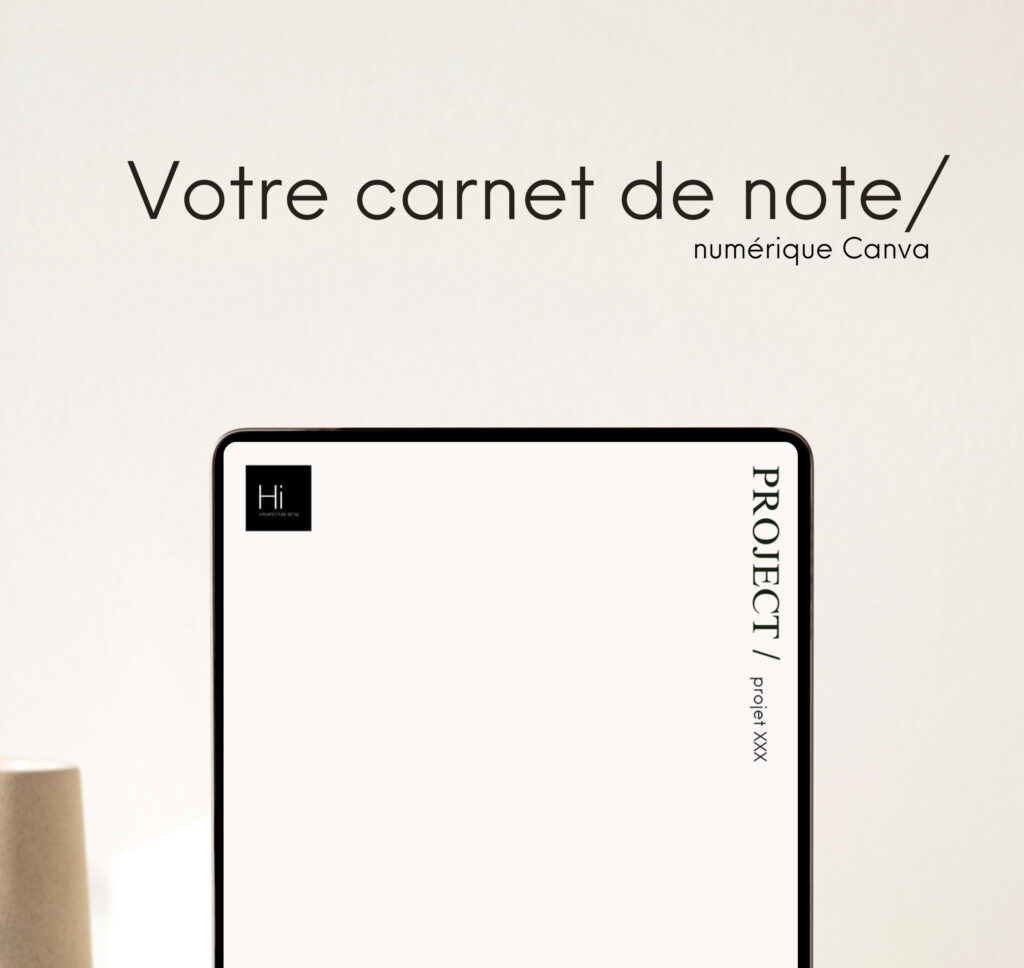
To help you organise your ideas, we've created a customisable notebook.
You can use it to take notes during your client briefing - and it's 100 % free.
Bonus: you can even complete it with your own questionnaire.
📎 Download here (link)
You deserve to create with clarity, not in a fog
Understanding your customer is not a gift reserved for the most experienced.
It's a skill that you can develop, structure and refine - project by project.
The more you set a framework, the more freedom you gain.
The more you really listen, the more you just create.
And the more you equip yourself with the right tools, the more serenely you move forward.
So no, you don't have to guess everything.
You don't have to carry everything alone.
You can rely on a clear method... to unleash your creativity.

Explore our templates
Discover our Professional Templates on Canva and InDesign
Simplify your creative projects with our personalised, elegant templates, available on Canva and InDesign. Designed especially for architects and designers, these templates let you create presentations, portfolios, mood boards and much more in the blink of an eye. Save time, maintain professional visual consistency and showcase your work with modern, striking designs.
Explore our collection and find the perfect template to bring your ideas to life!